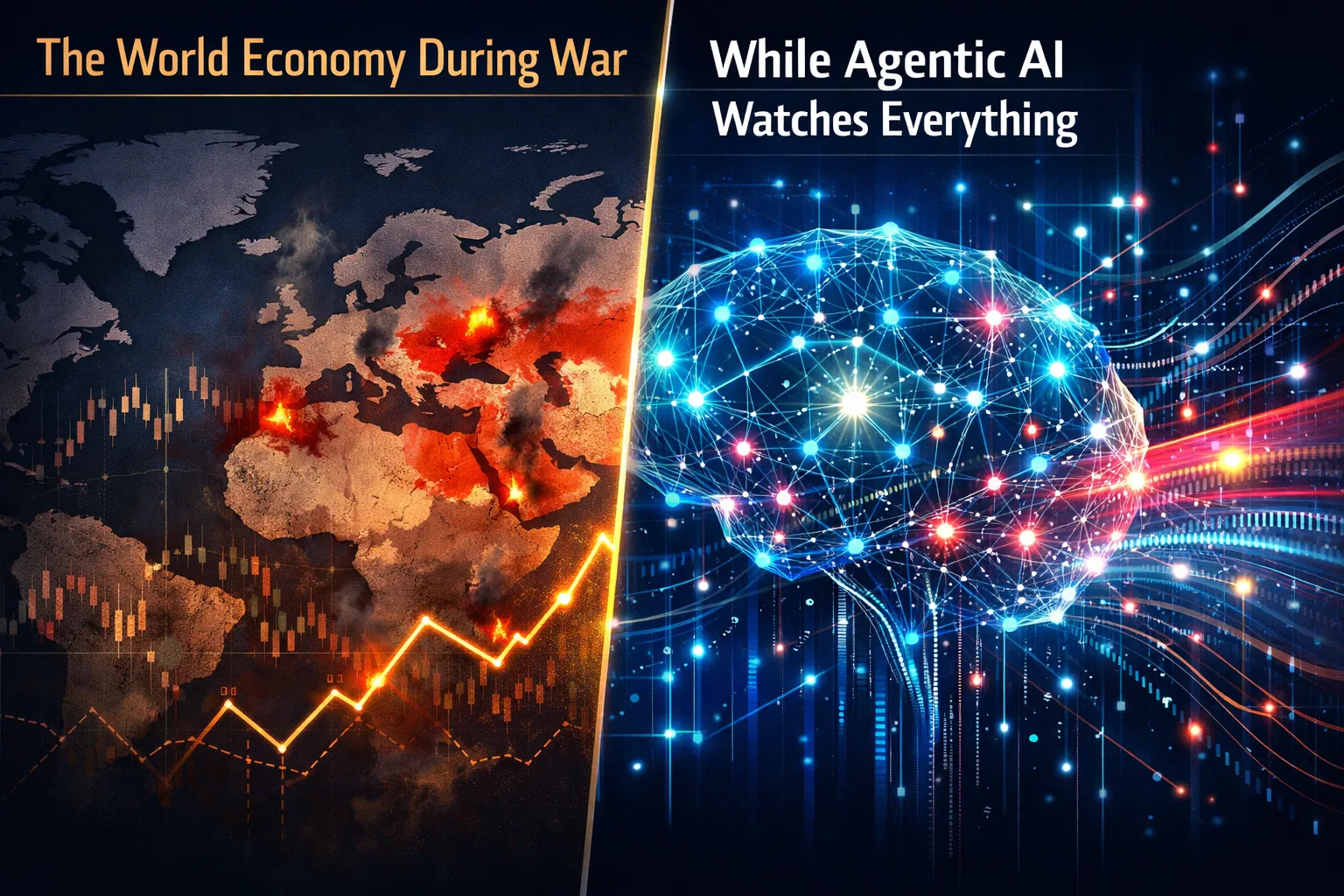
Something strange is happening in the global economy right now.
On one side, geopolitics feels increasingly unstable. Wars, trade tensions, sanctions, supply chain disruptions. Energy markets jump when missiles fly. Shipping routes change overnight. Governments talk about security more than globalization.
On the other side, artificial intelligence—especially the new generation of agentic AI systems—is processing every signal, every trade, every supply chain disruption in real time, faster than any human analyst ever could.
- Markets reacting to missiles.
- Shipping containers rerouting across oceans.
- Currency markets responding to central bank signals.
- Commodity prices adjusting to geopolitical risk.
And somewhere in data centers around the world, algorithms are processing it all faster than any human ever could.
War and Markets Have Always Been Connected
This isn't new. Historically, war has always reshaped economies.
- World War II created modern industrial production.
- The Cold War accelerated technological innovation.
- The Gulf War reshaped oil markets.
But the difference today is speed.
Financial markets react instantly. Satellite data, shipping trackers, and commodity futures all move within minutes of geopolitical news.
The modern economy is a web of interdependencies. Every node is connected to every other node. Disruption anywhere ripples everywhere.
The Supply Chain Chessboard
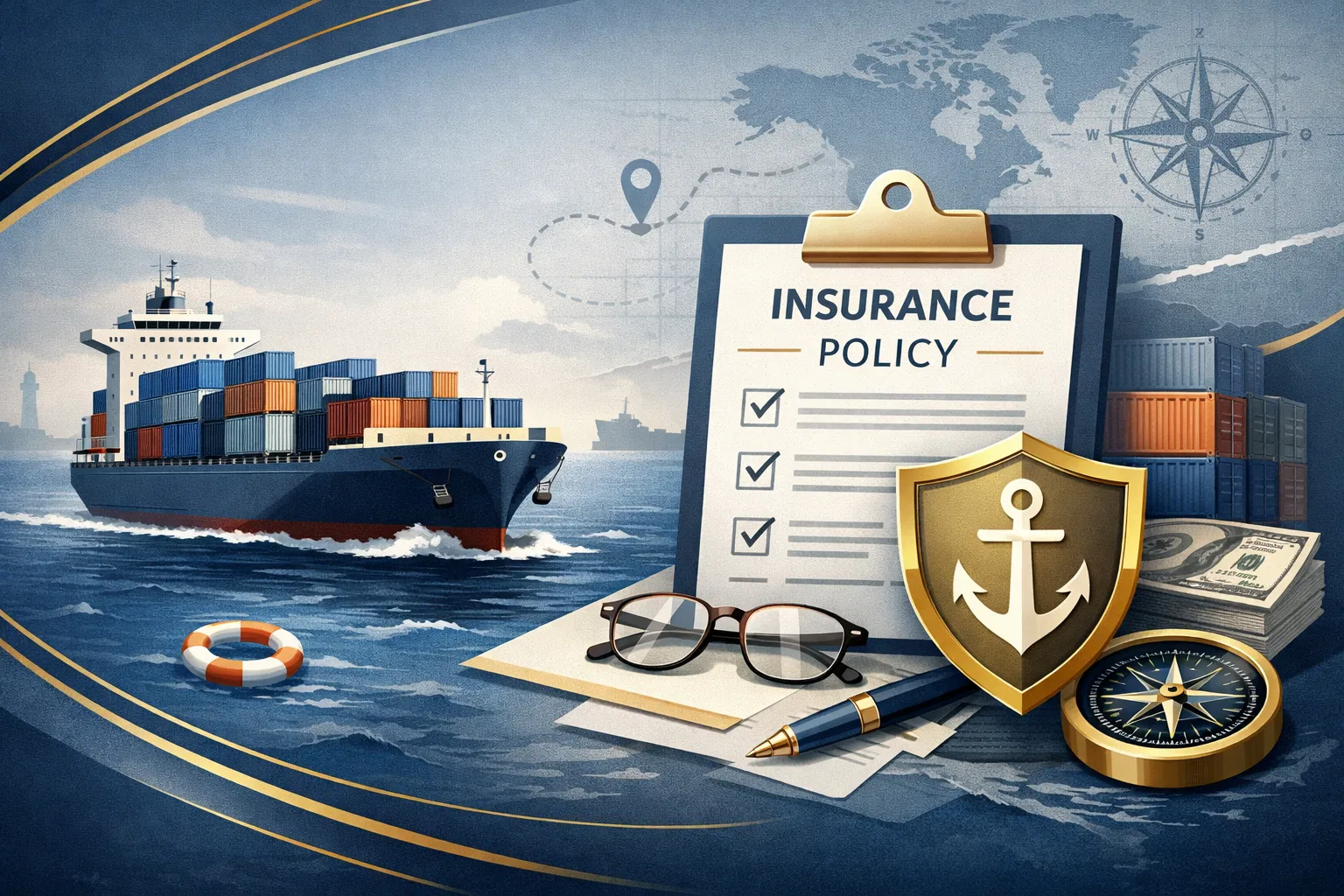
Modern wars aren't just fought with weapons. They're fought with logistics.
- Energy pipelines.
- Semiconductor supply chains.
- Rare earth minerals.
- Shipping corridors.
When conflict disrupts one piece of the system, markets reprice risk everywhere else.
That's why oil futures spike when tensions rise in the Middle East, or why semiconductor stocks react to tensions in East Asia.
The modern economy is basically a giant interconnected network. Pull one thread and the whole web vibrates.
Enter Agentic AI
Now add something new to the picture: agentic AI.
Unlike older software tools, agentic AI can act autonomously toward goals. It can monitor data streams, detect patterns, and sometimes make decisions without constant human direction.
Financial institutions are already experimenting with systems that monitor geopolitical news feeds, shipping activity, satellite imagery, macroeconomic indicators, and social media sentiment all simultaneously.
Imagine an AI system noticing unusual tanker movements in a shipping lane, cross-referencing that with political news, and predicting an energy market shift before traders even finish reading the headline.
That's not science fiction anymore.
Humans Still Run the Show (For Now)
Despite the hype, the global economy is still fundamentally human.
- Politicians decide sanctions.
- Central banks set interest rates.
- Investors panic and chase trends.
AI can analyze patterns, but it can't fully understand human emotion, political strategy, or cultural nuance.
And finance is still deeply tied to human psychology. Markets move not just because of data, but because of fear, expectations, and narrative.
Watching the World Through a New Lens
Studying finance right now feels like watching history unfold in real time.
You begin to see the invisible threads: how a single geopolitical decision ripples across markets within seconds, how technology doesn't just analyze the economy but fundamentally changes how we understand it, how the global economy isn't governed by laws but by networks of interdependence and fear.
The combination of war, global markets, and AI analysis creates a fascinating moment.
Human decisions are shaping the world's direction. But increasingly, machines are the ones observing, measuring, and interpreting those changes.
Which raises a darker question: In a world where AI sees everything faster than we do, who really controls the narrative? Humans write the headlines. But algorithms write the future.