The global economy runs on ships.
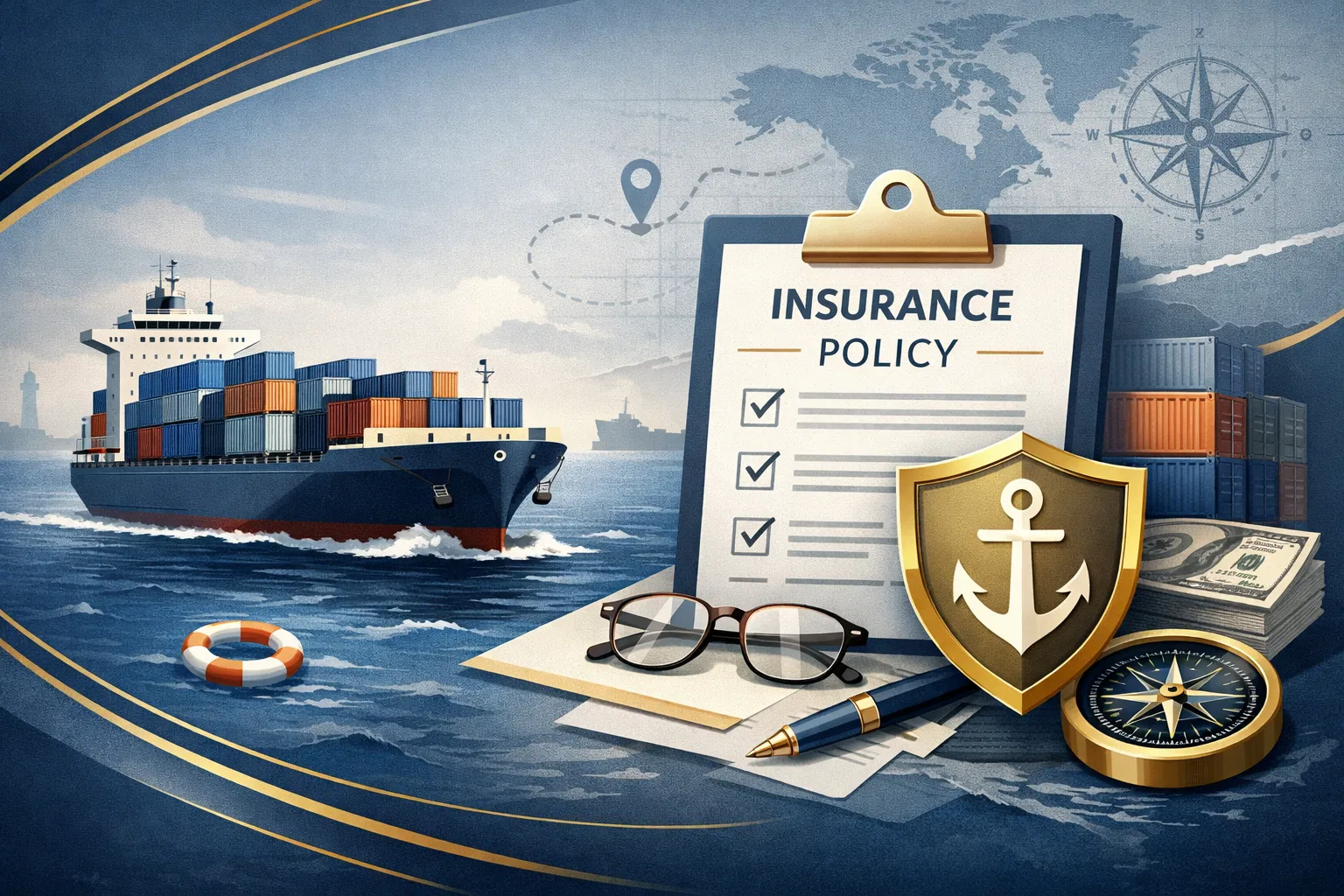
About 80-90% of world trade moves by sea. Oil, grain, electronics, cars—if it crosses oceans, it usually travels on a vessel insured by a complex network of underwriters.
For centuries, the center of that network has been Lloyd's of London, the world's most famous insurance marketplace.
But recent geopolitical tensions have raised an unusual question:
What happens when war makes shipping too risky for private insurers?
And more interestingly—could governments step in and replace them?
Why Marine Insurance Exists in the First Place
Shipping has always been dangerous.
Storms sink vessels. Pirates hijack cargo. Accidents happen in crowded ports. And sometimes, geopolitical conflicts turn shipping lanes into military flashpoints.
Marine insurance exists to protect against those risks.
Here's how the system usually works:
- Shipping companies buy insurance through brokers like Aon or Marsh.
- Those brokers place the risk with underwriters, often within the Lloyd's marketplace.
- Multiple insurers share the risk across syndicates.
This structure spreads catastrophic risk across many participants.
Most of the time, it works beautifully.
Until war enters the picture.
When War Breaks the Insurance Market
War introduces a problem insurers hate: uncertainty that can't be priced properly.
If missiles are flying near shipping routes or if governments might seize cargo, insurers struggle to calculate potential losses.
So one of two things happens:
- Insurance premiums skyrocket.
- Or insurers withdraw coverage entirely.
When that happens, global trade faces a serious problem.
Ships cannot legally enter many ports without insurance.
No insurance means no shipping. No shipping means supply chain shock.
That's where governments sometimes step in.
Governments as the Insurer of Last Resort
History shows that when private markets pull back, states occasionally fill the gap.
During World War II, governments provided war-risk insurance to keep trade moving.
After the September 11 attacks, governments supported aviation insurance markets when private insurers withdrew coverage.
The idea is simple: Trade must continue, even when risk becomes extreme.
In those moments, governments act as a temporary insurer of last resort.
Could the United States Do the Same for Shipping?
In theory, yes.
If geopolitical tensions disrupted major shipping lanes—think the Persian Gulf or key Asian trade routes—the U.S. government could create a program offering war-risk insurance or guarantees for cargo shipments.
Such a system might involve:
- Government-backed insurance facilities
- Risk-sharing with private insurers
- Guarantees to shipping companies
- Coordination with financial institutions
The goal would not be to permanently replace Lloyd's.
It would be to stabilize trade during periods when private markets become too risk-averse.
What Happens to Companies Like Aon?
Interestingly, brokers like Aon probably wouldn't disappear.
In fact, they might become even more important.
Insurance brokers don't usually carry the risk themselves—they structure deals between clients and capital providers.
If governments became part of the system, brokers would likely:
- Structure policies
- Coordinate coverage layers
- Place risk between governments and private insurers
- Advise shipping clients
In other words, brokers remain the architects of the system.
The capital backing the risk just changes.
A Shift Toward Geopolitical Finance
The deeper story here may not be insurance.
It may be the gradual return of geopolitics into global economic systems.
For decades, globalization assumed that private markets would handle most commercial risks.
But strategic industries—shipping, energy, semiconductors—are increasingly entangled with national security.
That means governments may play larger roles in financial systems tied to global trade.
Insurance could be one of the first places where this shift becomes visible.
A Strange New Economic Era
The modern global economy is entering a complicated phase.
Geopolitical tensions are rising. Supply chains are strategic assets. And technology—from satellite tracking to AI analysis—is making markets react faster than ever.
Meanwhile, institutions built centuries ago—like Lloyd's of London—are still central to how risk is priced.
Watching how these forces interact is fascinating.
Because the future of global trade may depend not only on ships and cargo...
...but on who is willing to insure the risks of moving them.